

Quieting The Room
What does "listen to your intuition" actually MEAN?

This week I had a call with a fellow coach to talk shop. In describing her work, she said, “The somatic piece is helping clients settle their nervous system and feel so relaxed that their own wisdom flows in easily, and then they’re like, ‘Oh, that’s what I need to do.’”
I felt my whole body say YES and a big sigh released from my chest. THAT’S IT! That’s at the heart of every one of my coaching sessions, though I come at it from a different angle.
Everything I know about inner wisdom
The good news is there’s a voice inside of me with every answer I need. This feels like woo-woo hyperbole when I write it down but I’ve seen dozens of other people find that voice and I’ve heard it speak from their mouths. I’ve heard my own, and I know how easy everything feels once I find it. Somewhere inside me, all my decisions are simple and every next step is clear.
The bad news is there are other, much louder voices that are certain they have the right answer. They either tell me that they are my intuition or that pursuing intuition is useless and childish and I should grow up and get a real job. Sometimes my brain feels like this horrifying gameshow challenge. How do I know which one is the real one? How do I know which one to trust?


The only thing I have found that consistently works for me (and my clients) is to quiet the loud voices one by one until only the wise voice is still left talking. This is how I do it.[1]
Why are the voices so loud and persistent?
Because they want you to hear them. They are likely saying stuff you don’t want to hear or that you’ve heard from them a million times before (”You’re no good at this so you should just quit” “No one cares about this thing you’re making and even if they do care they’re going to hate it” “You better get this right or everyone you love will leave you”), but ignoring them will not make them any quieter. The truth is, they are terrified that if you don’t listen, something awful is going to happen. This is a life-or-death situation, and you’re brushing them off as though everything’s fine.
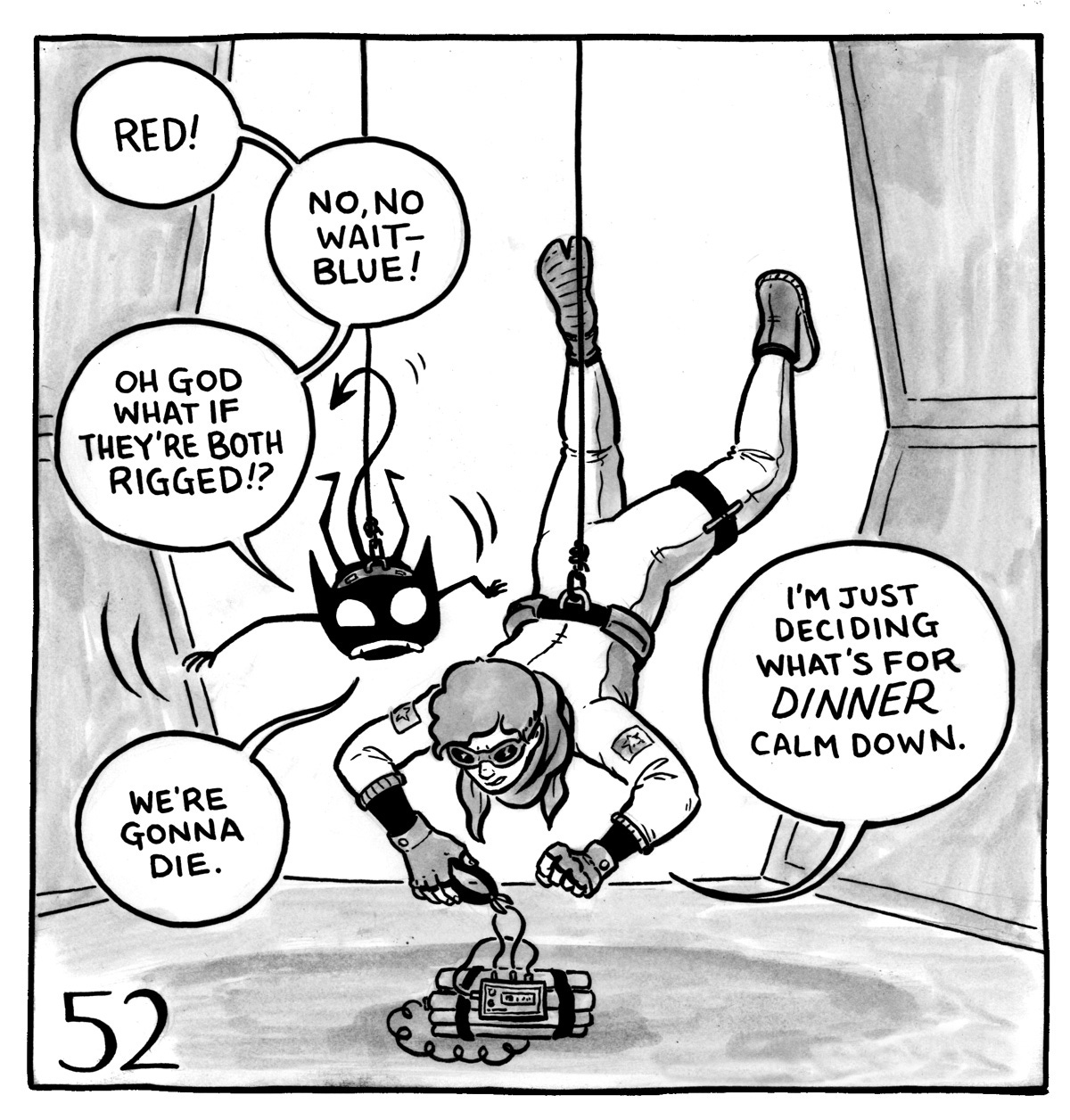
So first you have to convince them that you’re listening and taking them seriously and value their contribution, and then you have to convince them that you have things under control and you’ll keep them safe.
Step 1: Starting the conversation
When I do this on my own and not with a therapist, I make myself comfortable somewhere quiet, usually with a notebook. I take a deep breath or two and focus on the problem I’m having; let’s say I want to write a novel but I can’t seem to get myself to sit down and start. I focus on the feeling I get when I think about sitting down and starting. Not just feeling as in emotion — feeling as in physical sensation. Is it a hard, heavy stone at the bottom of my stomach? Does my chest or throat feel tight? Do my arms or legs tingle? I try to identify as many body sensations as I can and focus on them to see what they want to communicate with me.
I wait to see if any images, words, colors, song lyrics, or other abstract things come to mind while I’m focusing on the feeling. This usually helps me understand what emotion this sensation represents: grief, fear, anger, any of the guys from Inside Out. I start to gently ask it questions: what are you afraid of? What do you need? What hurts?
More often than not, the answer to “what do you need?” is not doable. Usually it’s something like “For you to stop writing forever” or “More money” or “To be universally adored and never criticized.” The goal is to peel back the layers of why it needs this and what it would provide. Safety, connection, value, love — these are typically the fundamentals underneath these desires and they are the things you can actually give it.
A gentle conversation, like one you might have with a crying kid, starts to get at the heart of things. The fear that comes up when I try to write might tell me, “I’m afraid I’ll never finish. I’m afraid it won’t be any good. I’m afraid people will think it’s silly or bad. I’m afraid I won’t do it right.”
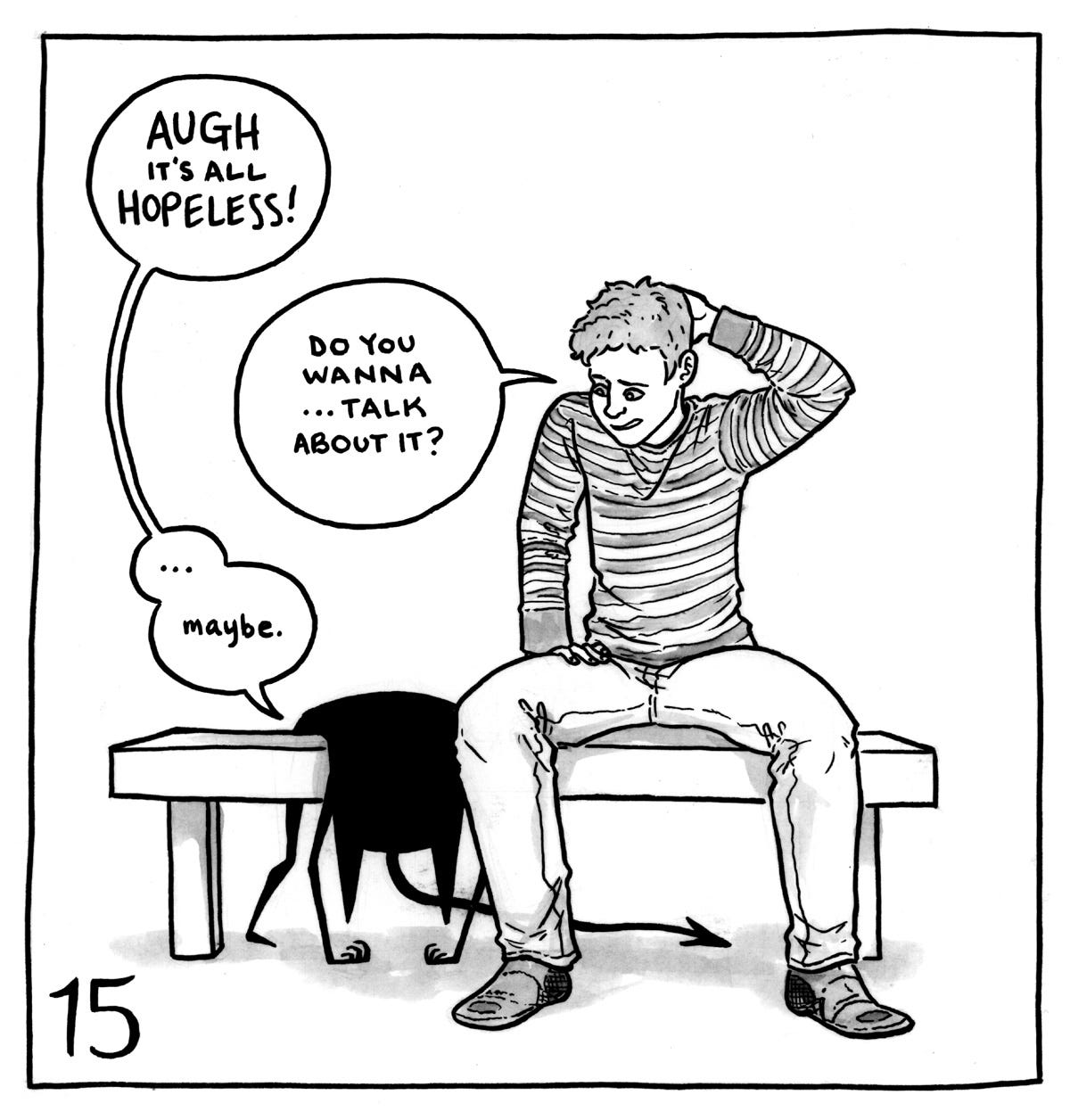
Step 2: Validating the voice
If this particular voice has been around for a long time, there might be another voice that starts negating it as soon as it speaks. “This fear is silly, everything is fine. Let’s move on.” No thank you, sweet voice, we’re going to stay here for a minute. I appreciate your input but I want to talk to this scared voice first. Would you mind sitting quietly for a bit? Trying to shout down the fear just creates more noise, and we are aiming for silence.
Just like everyone else in the world, the fear (or anger or hurt or whatever) wants to know it is valid. It needs to be heard and valued before it can relax enough to quiet down. And even if the fear is not useful in this moment, there was a time when it was useful, or else it wouldn’t be here. So I can sincerely thank it for its concern and its willingness to protect me and let it know that I don’t need it right now. I’ve got this. I’ll protect both of us.
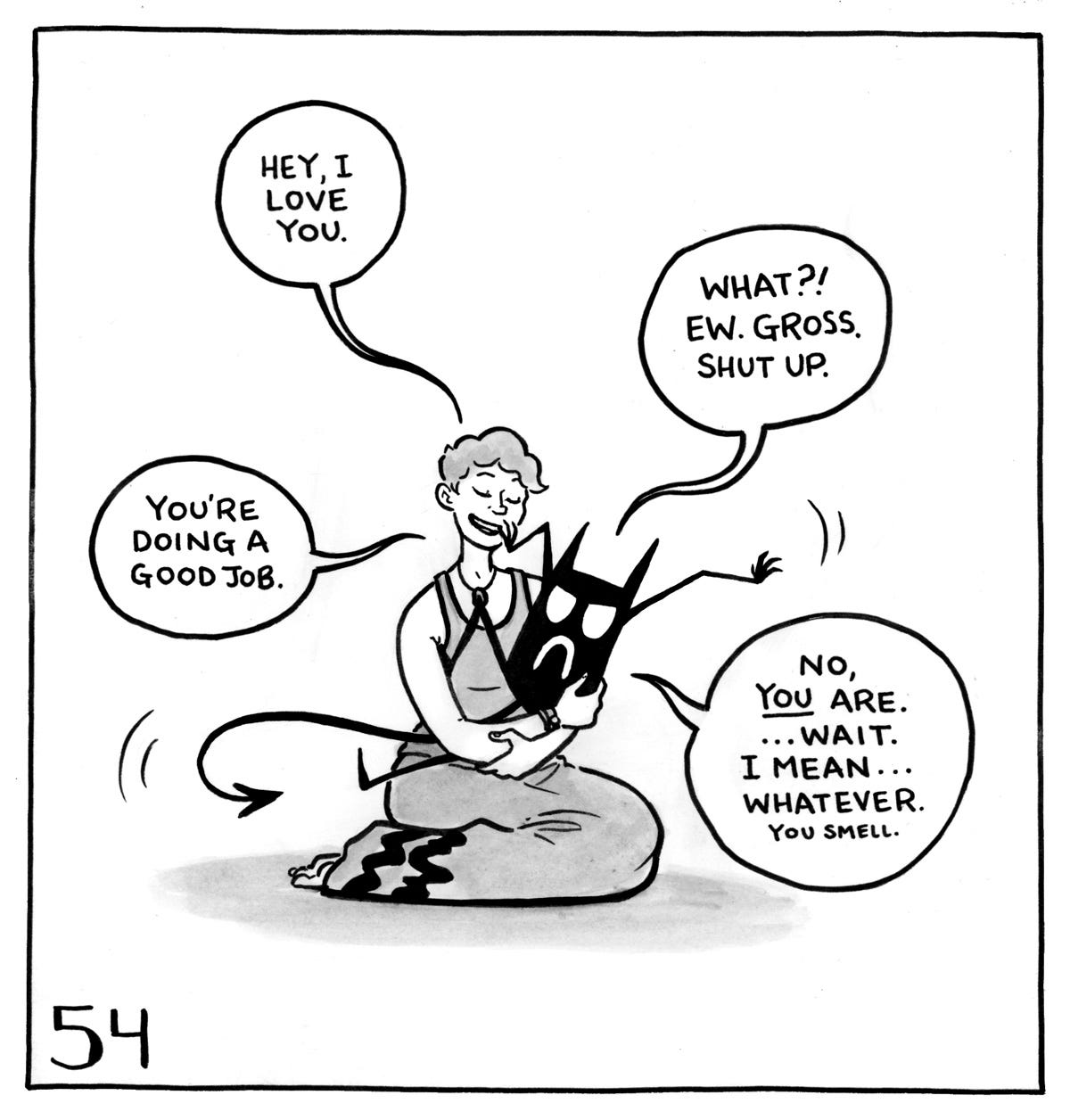
Step 3: Letting the voice rest
It’s completed its job! It rang the alarm bells and I stopped and listened and took the alarm bells seriously. Now it has to trust that if I choose to ignore the alarm, it’s for a good reason.
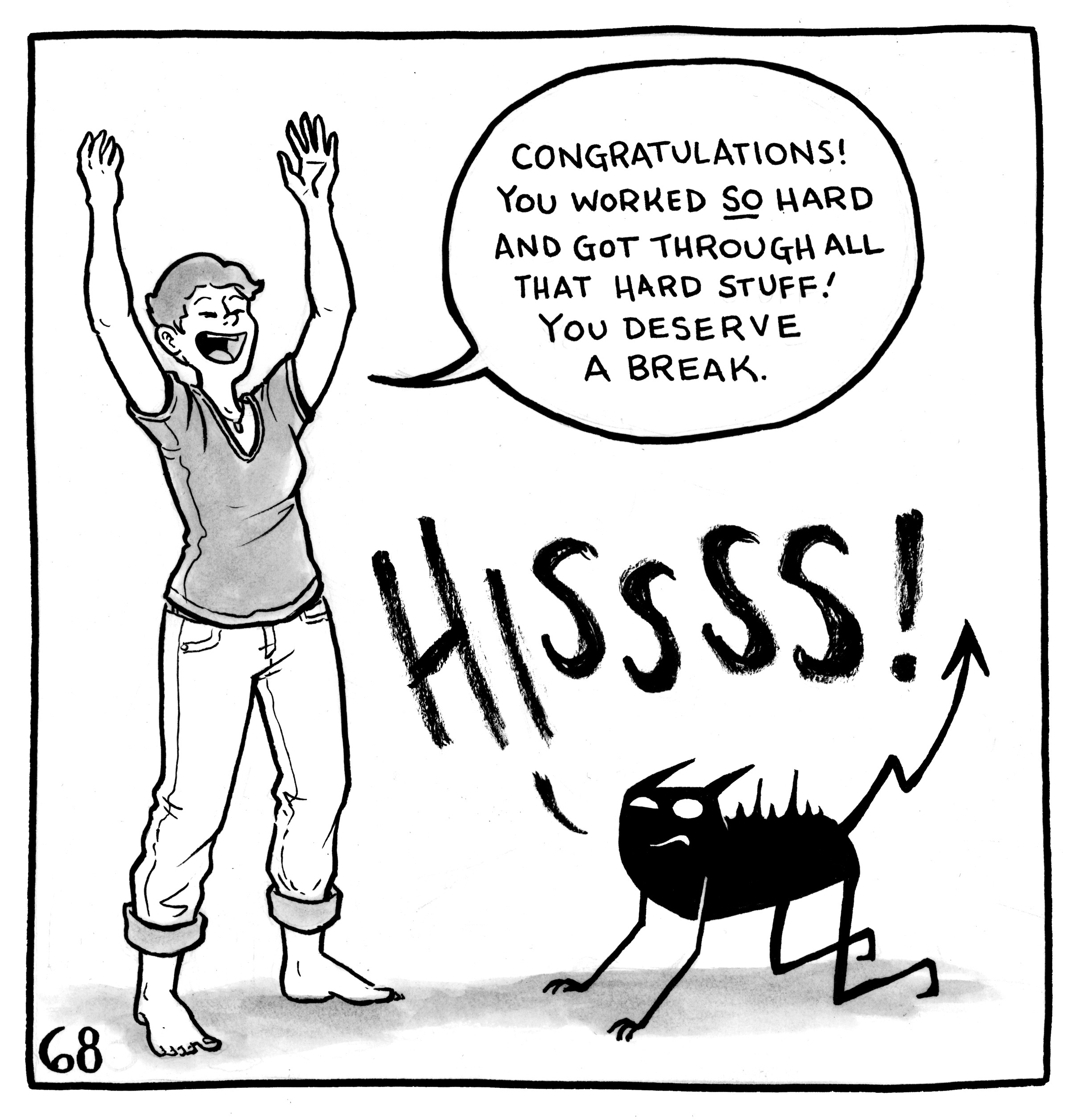
Having thanked it for its hard work, I offer it a break. Where would it feel most safe? Maybe a lush library filled with books it can critique? Or a dark movie theater where it doesn’t have to think so hard? Or maybe a mossy hilltop where it can still oversee everything but doesn’t have to chase down threats. Wherever it feels most at home, I picture it as vividly as possible with the voice resting contentedly. (Some forms these voices have taken: an anxious duck, a floating brain with glasses, a friendly ghost, an old Jewish New Yorker.)
In addition to being a nice way to close the conversation, finding this safe place becomes a helpful shortcut for the next time it bugs me. Instead of starting from scratch I can say, “Hello, yes, thank you, your contribution is noted, please head back to your cozy nest.”
Is it quiet yet?
Hopefully at this point things start to become clear. The next steps become obvious and uncertainties start to fall into place. If not — if the voice telling me what to do next sounds kinda mean or judgmental, or something still doesn’t feel right in my body — I rinse and repeat. Find the new loudest voice, talk it down, find a place for it to rest. Eventually the only voice left is one of serene confidence and loving certainty. This is the place where my own wisdom flows in easily.
If you have experience with Internal Family Systems, this process will be familiar to you. I am not formally trained in IFS, I’ve just done it a whole bunch.↩︎
Need help quieting the room? Book a free discovery call with me and let’s see if we can get there together.
The non-Bruegel illustrations in this newsletter are by Lucy Bellwood, who is amazing. If you like what you saw here, maybe buy the book or a plushie!
Hi wow I love all of this!!! Especially:
"No thank you, sweet voice, we’re going to stay here for a minute. I appreciate your input but I want to talk to this scared voice first. Would you mind sitting quietly for a bit? Trying to shout down the fear just creates more noise, and we are aiming for silence."
and
"Wherever it feels most at home, I picture it as vividly as possible with the voice resting contentedly. (Some forms these voices have taken: an anxious duck, a floating brain with glasses, a friendly ghost, an old Jewish New Yorker.)" made me laugh out loud. If I start thinking of my inner critic(s) as old Jewish New Yorkers, Larry David-esque, I can both laugh at their ridiculousness, honor what they have to show me about myself, and return them to your cozy nests, as you say. It's such a loving way of treating these voices who make us feel bad about ourselves. (Who are ourselves? )
I'm sure you've read this: https://www.scottishpoetrylibrary.org.uk/poem/guest-house/ but if not, here's a good companion to your companions.
Thanks as always for sharing yourself with us. These parts are especially tender and hard to talk about and you do so with such grace and lightness. <3 see you again soon!!
PS That Bruegel painting is also so my brain on any given day. Woof.